
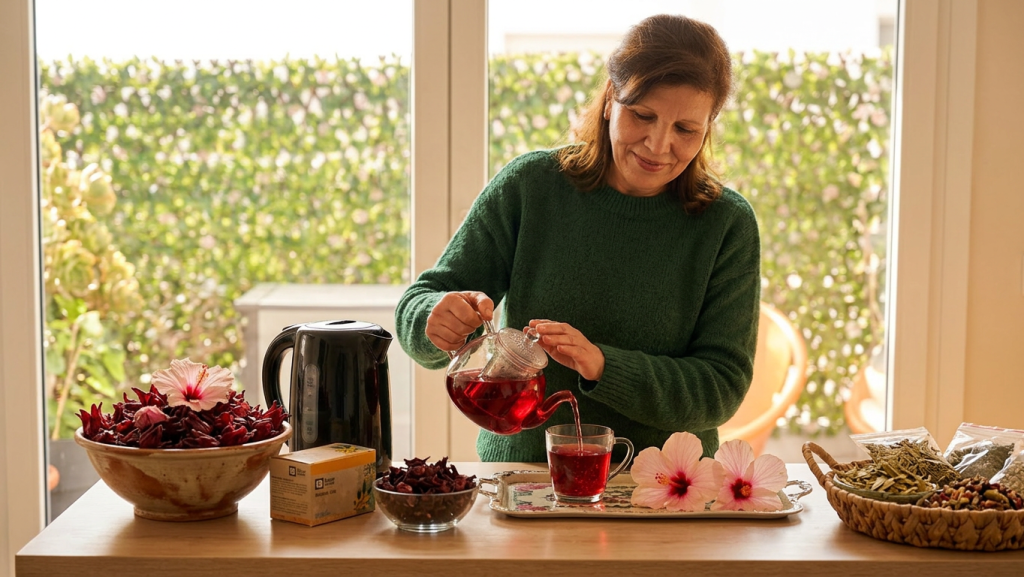
Health lover, today I want to share with you something that has been close to my heart for years, and maybe it can become close to yours, too. If your doctor has recently mentioned that your blood pressure is “running a little high,” take a breath. You’re not alone, and there are gentle, time-honored ways to support your body alongside any care your doctor recommends.
High blood pressure becomes increasingly common after 40 or 50, but small daily habits, including the right herbal teas, may help make a real difference. Today, we’re talking about one of the most beloved and well-studied herbs in natural wellness: hibiscus. And specifically, how hibiscus flower for blood pressure has earned its place in kitchens, clinics, and community traditions across generations.
“The body doesn’t raise pressure to bother us, it raises it as a signal. Let’s listen with care and respond with love.”
Why Does Blood Pressure Rise in the First Place?
Before we talk about solutions, it helps to understand the signals. Blood pressure can climb for many reasons, and most of them are connected to modern life:
Recognizing these triggers is the first step. The second step, and the one we love most at Nuestra Salud, is meeting those needs with simple, natural support.

Quick Daily Habits That May Help Lower Blood Pressure
While we focus on hibiscus flower for lowering blood pressure, these everyday practices can help set the stage for better results:
A simple breathing technique: inhale for 4 seconds, hold for 2, exhale for 6. Repeat for 5 minutes. Research suggests slow, paced breathing can create a meaningful and almost immediate calming effect on cardiovascular function.
Hibiscus for Blood Pressure: What the Science and Tradition Tell Us
Hibiscus, known in many Latin communities as flor de Jamaica, has been traditionally used for centuries in Mexico, the Caribbean, Africa, and Southeast Asia as a healing drink. Today, multiple scientific studies suggest that hibiscus flower for blood pressure may offer genuine cardiovascular support.
How hibiscus may support healthy pressure
And perhaps best of all, it’s naturally delicious, caffeine-free, and accessible. That’s a combination that’s hard to beat.
How to Brew the Perfect Hibiscus Tea for Blood Pressure Support
The method matters. A proper infusion, not boiled too long, steeped just right, helps release the bioactive compounds that give hibiscus its potential heart-supporting properties.
Therapeutic Hibiscus Infusion
Makes 1 cup · Prep: 2 min · Steep: 10 min
Ingredients:
Preparation:
Suggested daily intake:
1 cup in the morning, 1 cup in the afternoon.
Consistency is everything. One cup is a lovely gesture to your body but two cups daily maintained over weeks, is where traditional use and preliminary research suggest the most benefit may be seen.
Habits That Multiply the Effect
Using hibiscus for blood pressure works best as part of a broader commitment to self-care. The body responds beautifully when we give it more than one reason to feel well:
Blood pressure doesn’t increase because of just one factor, and it’s not corrected by a single solution either. It comes back into balance through a combination of small, consistent actions. That’s the idea behind traditional herbal wellness it’s not just about the herb itself, but the overall lifestyle that supports it.
A loving reminder: If you are currently taking medication for blood pressure, please do not stop or adjust it without talking to your doctor first. Herbs like hibiscus are wonderful companions to a health plan, not replacements for medical treatment. Always let your healthcare provider know about any supplements or teas you’re regularly consuming.
“Every cup of tea, every walk, every deep breath is a message to your body: I am taking care of you.”
High blood pressure doesn’t appear overnight, and it doesn’t resolve overnight either. But it can respond, beautifully, to steady, loving care. We hope hibiscus becomes a warm part of your daily ritual. Explore more herbal wellness guides on Nuestra Salud, and as always, we’re here with you every step of the way.
Con cariño, Toñita 🌺.


