
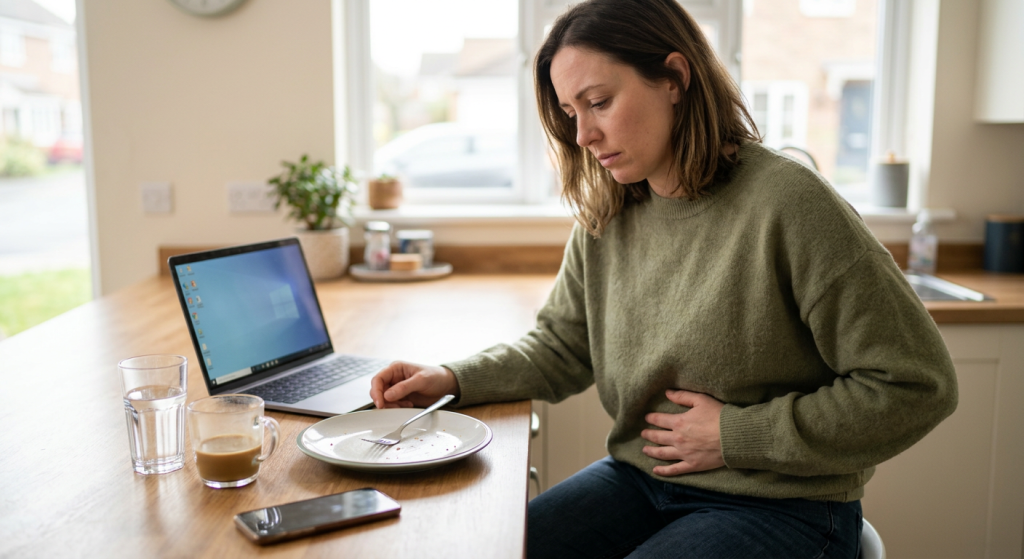
You’re not sick. But you’re not quite right either.
Bloating after lunch, that sluggish heaviness by mid-afternoon, energy that seems to disappear before 3 PM, sound familiar? You’re not alone. Digestive complaints are one of the most common health concerns in the U.S., and they’re getting more common every year.
According to the American Gastroenterological Association, more than 70 million Americans live with some form of digestive disease, and that doesn’t even include the millions more who deal with everyday discomfort that never quite gets a diagnosis.
The good news? In many cases, your digestion isn’t broken, it’s responding to your habits. Before reaching for an antacid, it’s worth asking: what’s changed in how you eat, sleep, move, and manage stress?
5 everyday habits that may be wrecking your digestion:
It’s rarely one dramatic event. More often, it’s a cluster of small, repeated patterns your body has been quietly reacting to for months.
Why digestion responds first:
Your digestive system is sometimes called your «second brain», and for good reason. It contains more than 100 million nerve cells, communicates constantly with your brain via the vagus nerve, and houses roughly 70% of your immune system. When something in your life is off, a stressful week, a few nights of bad sleep, a stretch of poor eating — your gut is often the first system to raise a flag.
This is why bloating, heaviness, irregular bowel movements, and low energy after meals aren’t random. They’re signals. And the earlier you pay attention, the easier it is to course-correct.
Simple, low-effort ways to support your digestion:
No overhaul required. These small shifts can start making a difference within days:
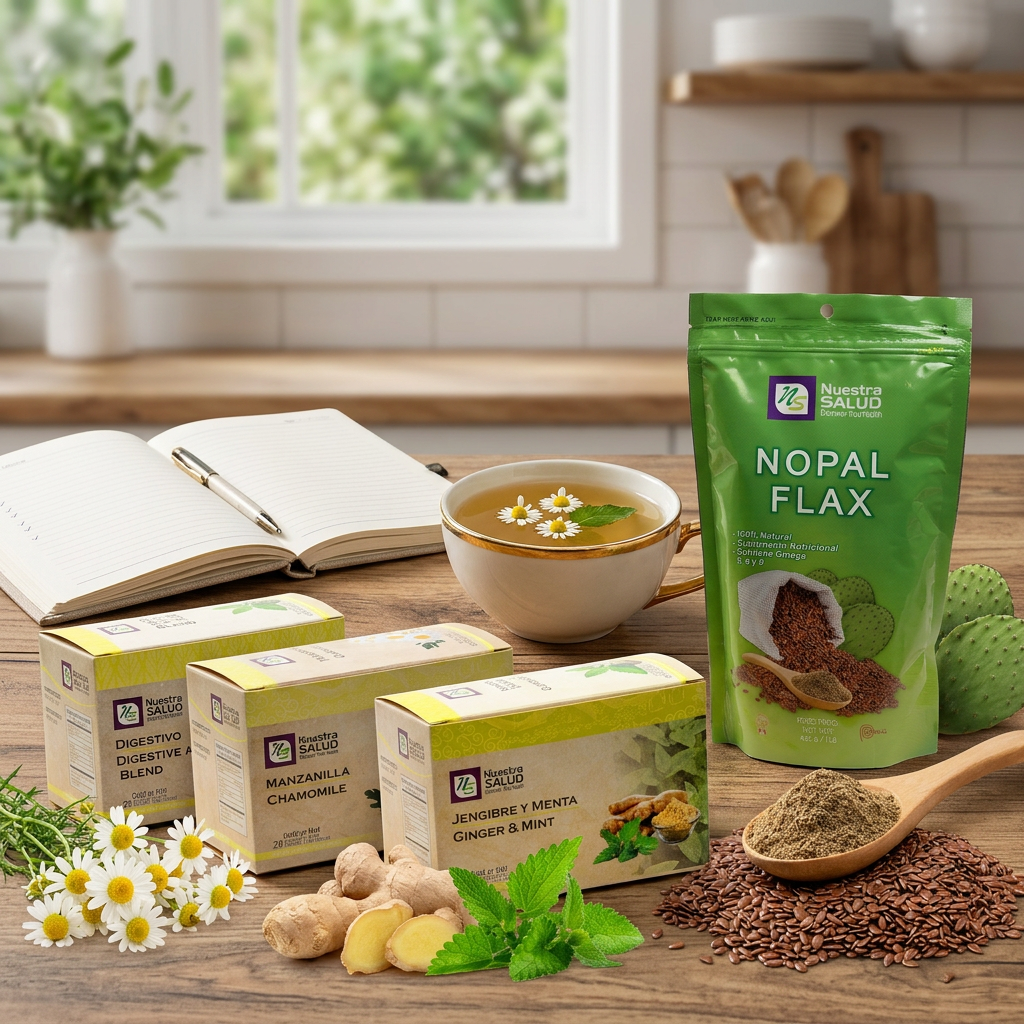
Support your gut with Nuestra Salud’s natural products
Nopal Flax (16oz / 454g): A natural fiber blend that helps keep your colon clean, supports healthy digestion, and promotes vitality.
Digestive Aid Blend – Herbal Tea Bags (0.87oz / 25g): Specially formulated to relieve occasional stomach discomfort and slow digestion. Ideal after meals.
Chamomile (Manzanilla) Tea Bags (0.87oz / 25g): A calming, digestive herbal infusion, the perfect after-meal ritual to soothe your gut naturally.
Ginger & Mint (Jengibre y Menta) Tea Bags (0.87oz / 25g): Ginger relieves muscle tension and mint supports digestion, a powerful, natural combo your gut will love.
«Your body isn’t failing you. It’s communicating with you. Digestion is one of the clearest channels it has.»
Digestive discomfort in America is so common that we’ve started treating it as normal. It’s not. Bloating, heaviness, and low energy after meals are your body’s way of flagging that something in your daily routine needs attention.
You don’t need a cleanse, a fad diet, or a complete lifestyle overhaul. You need to identify which of these five habits is hitting hardest for you, and start there. Small, consistent changes to how you eat, move, sleep, and manage stress can lead to noticeable improvements in how you feel, often within just a few weeks.
Your gut is trying to tell you something. It’s worth listening.


